Our Process

A three-step engagement to diagnose chaos, design central systems, and implement sustainable operations.
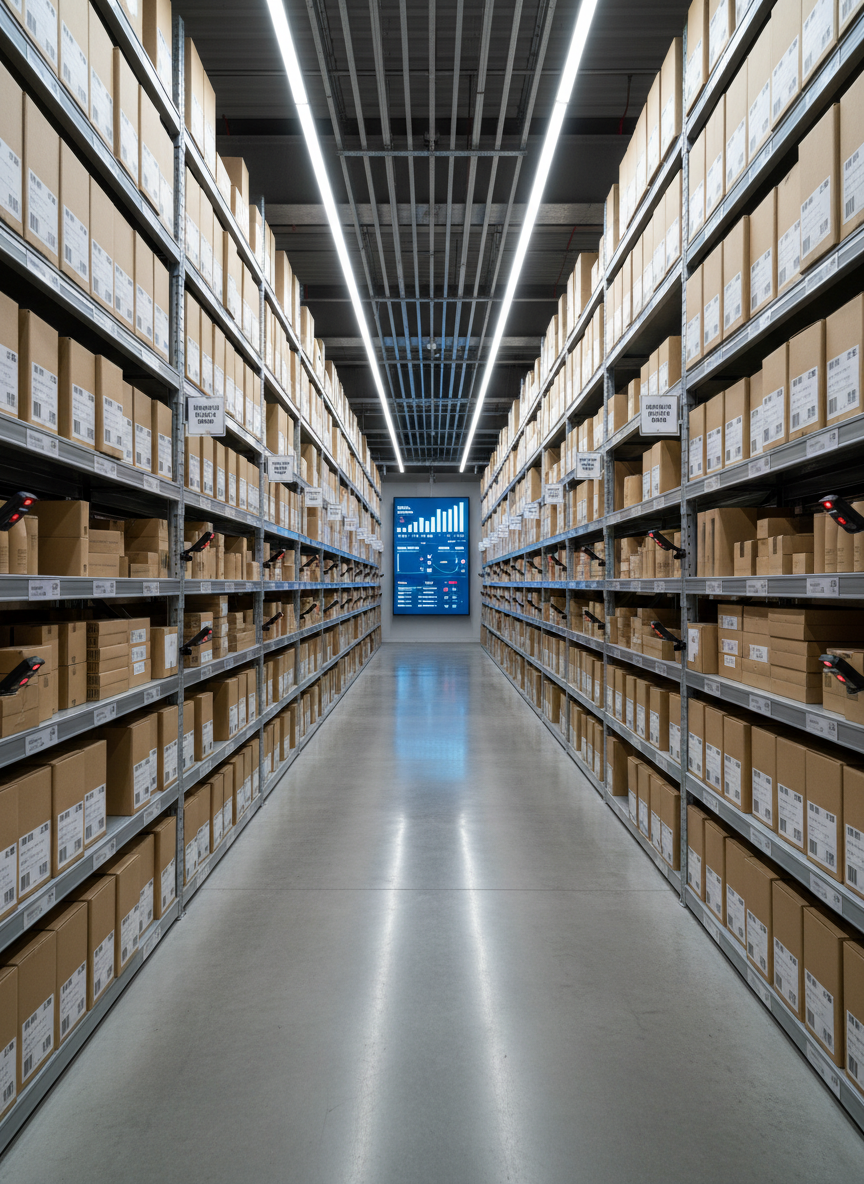

A long, photographic aisle in a well-organized warehouse, shelves stretching into the distance on both sides, stacked with uniformly labeled cardboard boxes and neatly arranged products in neutral packaging. Small digital scanners and barcode labels are visible on shelf edges, hinting at integrated inventory systems. Overhead LED lighting casts bright, even illumination, creating rhythmic patterns of light and shadow along the polished concrete floor. At the far end, a large digital display panel glows with a simplified visual of stock levels and order flow. Shot from eye level with deep focus, the image conveys scale, order, and streamlined logistics, embodying reduced inventory chaos and efficient, systematized operations.
A close-up, photographic shot of a sleek laptop on a clean, matte-white desk, its high-resolution screen filled with a structured operations dashboard showing inventory levels, supply chain stages, and vendor performance metrics in clear, color-coded blocks and graphs. Next to the laptop sit a slim metal pen, a graph-paper notebook with precise, geometric diagrams, and a minimalist wireless mouse. Cool, indirect office lighting combines with soft natural light from an unseen window, creating subtle highlights along the laptop’s brushed aluminum edge. Captured at a slightly elevated angle with shallow depth of field, the interface is crisp while the background fades into a soft blur, conveying focus, control, and the precision of professional operations consulting.

A Clear, Centralized Operations Path

We start by auditing your data, vendors, and tools, then design a centralized operating system, implement it alongside your team, and train operators so the new workflows stick and continuously improve.

Workflows

Visual maps show how orders, inventory, purchasing, and vendors connect through one system, clarifying bottlenecks and revealing where automation and better tools immediately reduce stockouts and overbuying.

A long, photographic aisle in a well-organized warehouse, shelves stretching into the distance on both sides, stacked with uniformly labeled cardboard boxes and neatly arranged products in neutral packaging. Small digital scanners and barcode labels are visible on shelf edges, hinting at integrated inventory systems. Overhead LED lighting casts bright, even illumination, creating rhythmic patterns of light and shadow along the polished concrete floor. At the far end, a large digital display panel glows with a simplified visual of stock levels and order flow. Shot from eye level with deep focus, the image conveys scale, order, and streamlined logistics, embodying reduced inventory chaos and efficient, systematized operations.